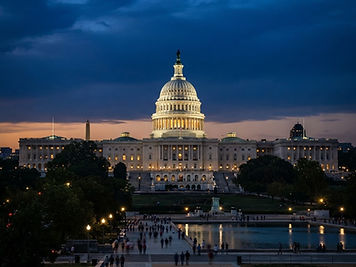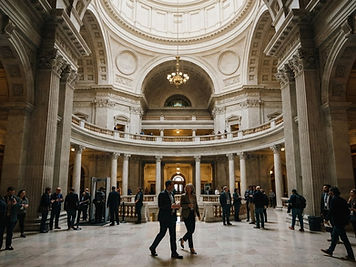
From the Original 33 expelled in 1868 to the governorship won this year, Georgia's story is one of doors opened, then shut, then pushed open again by people who refused to leave.
In September 1868, thirty three Black men took their seats in the Georgia General Assembly, elected under the new constitution of a state forced back into the Union. Within days they were expelled, on the argument that the state constitution did not grant Black men the right to hold office. They were called the Original 33, and their removal set the tone for a century of Georgia politics.
Two years later, Jefferson Franklin Long of Macon became the first Black Georgian to serve in the United States House of Representatives, the only Black member of Congress from Georgia during Reconstruction. When he left office in 1871, the seat stayed empty of Black representation for one hundred and one years.
White primaries, poll taxes, and the terror that enforced them kept it that way. Not until Andrew Young won a congressional seat in 1972 did Georgia send another Black representative to Washington. Maynard Jackson became Atlanta's first Black mayor in 1974, and the city's Black political class built an infrastructure that would eventually reshape the state: churches, fraternities, sororities, unions, and a generation of organizers trained in the discipline of turnout.
John Lewis carried that inheritance onto the floor of the House for more than three decades. In 2020, the year of his death, Georgia voted Democratic in a presidential election for the first time since 1992. Two months later, Raphael Warnock and Jon Ossoff won both of the state's Senate seats, and Warnock became the first Black senator in Georgia's history.
Stacey Abrams ran for governor twice and lost both times, and in losing built the most durable voter protection apparatus in the country. It is not an accident that the milestone arrived a few years after her work rather than a few decades.
So this year's result is not a beginning. It is the receipt for two centuries of labor: the Original 33 who walked back into the chamber they had been thrown out of, the students who sat at lunch counters, the organizers who knocked on doors in the rain for seats nobody believed could be won.
Georgia did not change overnight. Georgia was changed, patiently, by people who understood that history is not a wave that arrives but a door that gets pushed.
Published in The History Issue