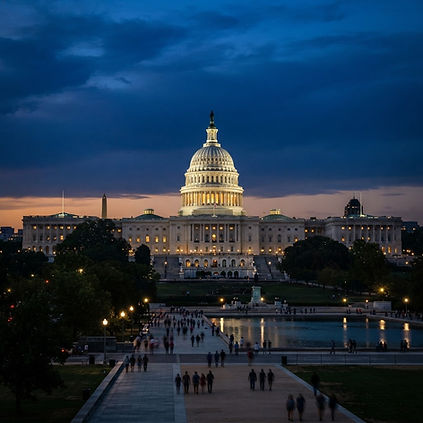
Democrats have captured control of both chambers of Congress and flipped multiple governorships and state legislatures, including a historic shift in Georgia, following the 2026 midterm elections.
The American political landscape underwent a profound transformation this week as Democrats secured majorities in both the U.S. House of Representatives and the U.S. Senate. According to reports from NBC News and other outlets, the party’s performance exceeded pre election expectations, resulting in a significant shift in power that will define the legislative agenda for the remainder of the current presidential term.
While the new majorities provide Democrats with control over the legislative process, they will still face the constraints of the 60 vote threshold in the Senate and the potential for presidential vetoes, ensuring that bipartisan cooperation remains a necessity for major policy advancements. Georgia emerged as a focal point of this electoral wave.
In a result that marks a significant departure from recent political trends, the state saw the election of a Democratic governor, Keisha Lance Bottoms, as reported by Spectrum News. Furthermore, Democratic Senator Jon Ossoff successfully defended his seat against Republican challenger Mike Collins.
These victories, combined with the party’s success in breaking Republican trifectas in the state legislature, signal a new era for Georgia politics, with implications for how the state will manage its policy priorities in the coming years. Beyond Georgia, the Democratic surge extended across the country, with the party flipping governorships in Iowa, Nevada, Ohio, and Texas.
According to the National Conference of State Legislatures, these gains have left Democrats holding more governorships than Republicans for the first time since before 2010. The shift in state level power is particularly consequential, as states maintain broad authority over critical areas such as economic development, taxation, and the implementation of federal programs like Medicaid, which are currently undergoing significant changes following the 2025 reconciliation law.
State legislative chambers also saw dramatic shifts. Democrats successfully flipped both chambers in New Hampshire and Wisconsin, while also securing control of at least one chamber in Michigan, Minnesota, North Carolina, Pennsylvania, and Texas. Analysts from U.S. News note that while these legislative races often receive less national attention than federal contests, they are essential for shaping the day to day governance of the country.
The unexpected nature of some of these flips, particularly in Texas and North Carolina, underscores the volatility and intensity of the 2026 midterm cycle. As the dust settles, the focus in Washington and state capitals is shifting toward the upcoming legislative sessions. With new leadership preparing to take office in January 2027, officials are beginning to outline their agendas.
In the education sector, for instance, newly elected state chiefs, such as Lydia Powell in Georgia, are already signaling priorities ranging from increased teacher pay to expanded early childhood funding. These transitions will be closely watched as the new political order begins to implement its vision for the country.
Published in Politics Briefing