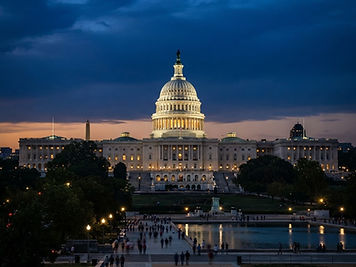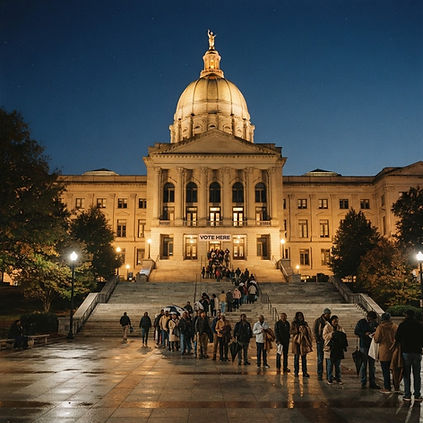
Statewide races are usually where history moves slowest. This cycle they moved first, and the result is a class of governors unlike any the country has seated at one time.
American politics remembers its waves by what they left behind on the map. A Senate seat here, a statehouse there, a redrawn district that outlives the year it was drawn. What made this cycle different is where the wave landed first: in the governor's races, the offices that decide how a state votes, teaches, sentences, and heals.
The governor's mansion has always been the slowest door in American politics. Pinchback of Louisiana governed briefly during Reconstruction, but no Black American was elected to a governorship until L. Douglas Wilder won Virginia in 1989, more than a century after the promise of Reconstruction was abandoned. Deval Patrick followed in Massachusetts in 2006. Wes Moore in Maryland in 2022. Three elections across thirty three years, in three states, is the whole of that history until very recently.
The same slowness marks other firsts. New Mexico sent Ezequiel Cabeza De Baca to the governor's office in 1917, making him the first Hispanic governor elected in the continental United States, a fact known to few outside the state he served. Susana Martinez became the first Latina elected governor anywhere in the country in 2010. Bobby Jindal of Louisiana, elected in 2007, was the first Indian American governor in the nation's history, and Nikki Haley of South Carolina the second, three years later.
Read as a list, those names describe a country that took its time. Read as a wave, this cycle describes a country catching up all at once. In state after state the winning statewide ticket looked like the state's future rather than its filing cabinet: Black women at the top of the ticket, Hispanic attorneys general, Asian American lieutenant governors, and judicial candidates whose names had never appeared on a ballot before.
Georgia is the clearest evidence. The state that expelled its Black legislators in 1868 and did not send another Black representative to Congress until 1972 has now elected a Black woman as its governor. That sentence would have read as a wish a decade ago. It reads as a record today.
What separates a wave from a moment is what happens after the cameras leave. Governors appoint judges, sign budgets, and set the terms of the next decade's redistricting. The firsts celebrated on election night become ordinary facts of governance on the first Tuesday of the following January, when a courtroom opens and a bench looks different than it did the year before.
That is the test we will be watching in these pages. Not whether history was made, but whether it holds.
Published in The History Issue